Rock Paper Kingdoms
TapHub GamesStrategy
4.7174.00 Reviews
- Version
- 0.2.1
- Installs
- 10.00K
- Age Rating
- Everyone
Screenshots
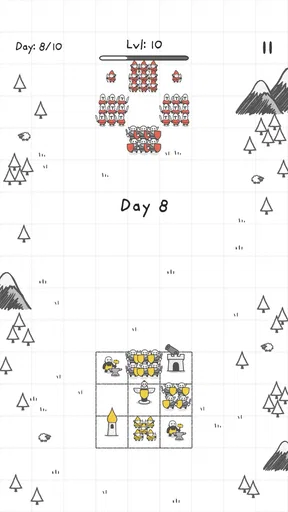
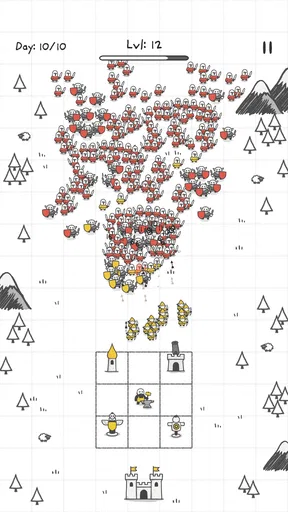
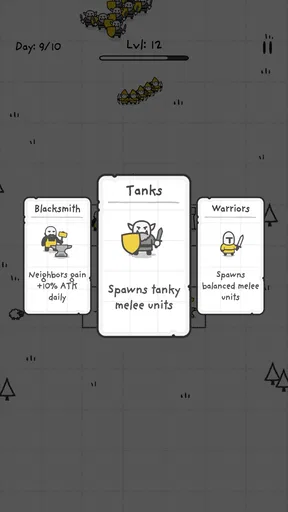
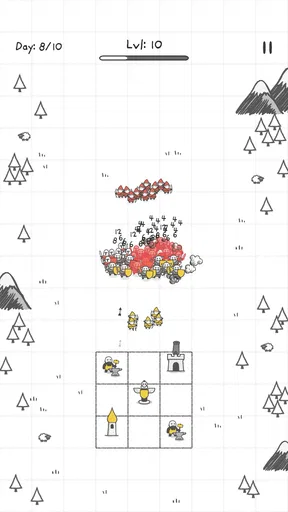
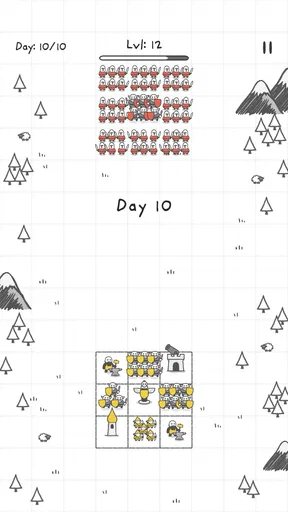
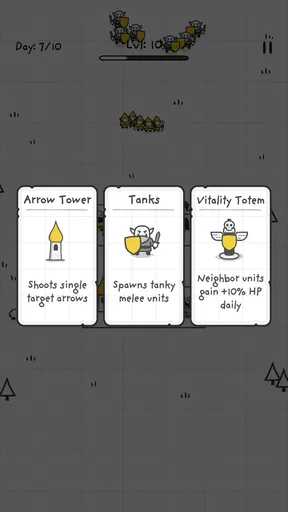
Our Review of Rock Paper Kingdoms
 Analysis by Appyee
I went into Rock Paper Kingdoms expecting a simple strategy game built around a familiar idea, but its appeal comes from how that idea is turned into a repeatable defense routine. You summon units, improve your army and try to hold against continuing enemy sieges. That basic loop is easy to understand within minutes, yet it still gives me small decisions to make instead of asking me to watch the battle unfold. For players who enjoy short tactical sessions, it has a welcoming first impression.
The game is free to play, and it is listed for Everyone, which makes it an approachable choice for younger players and families looking for something less complicated than a large-scale strategy title. TapHub Games is the developer, and the game sits firmly in the strategy category rather than presenting itself as a deep kingdom simulator. That distinction matters: I see it as a compact army-management and defense experience, not as a substitute for a huge campaign game with layers of diplomacy, exploration and construction.
Its current average is 4.7 from around 461 ratings, while the game has passed 10K installs. Those numbers suggest that the early experience has connected with a modest but interested audience. The release is still relatively new, with a January 21, 2026 release date and version 0.2.1, so I treat it as a developing game rather than a finished, fully established strategy platform. That makes the first week more interesting, but it also makes long-term judgment important.
Why the first week is easy to enjoy
The strongest part of my early time with the game was the clarity of its central task. I am not buried under a long tutorial or forced to understand a dozen systems before I can make a meaningful choice. The premise is immediately readable: build an army, use the available units sensibly and survive the pressure of enemy attacks. The first few sessions work because every decision feels connected to the next siege.
The rock-paper-scissors theme gives the battles a recognizable strategic foundation. Even without a complicated rulebook, I can think about matchups rather than simply dropping the most powerful option every time. That creates a useful habit: before spending resources or committing a unit, I consider what kind of opposition may be coming and whether my current force has a sensible answer. It is a small layer of planning, but it stops the game from feeling like a completely automatic defense screen.
My practical advice for a new player is to resist upgrading the first unit that seems convenient. Early progress is a good time to observe which encounters expose weaknesses in the army. A balanced force may be less exciting than concentrating on one favorite unit, but it gives more room to react when the siege pattern changes. I found that this approach also reduces the frustration of reaching a difficult attack with an impressive-looking army that lacks the right counter.
That is one of the game’s less obvious strengths. The simple theme encourages experimentation without making the player feel punished for learning. I can try a different summon, notice where the defense fails and adjust the next attempt. In a bigger strategy game, this kind of testing may require a long campaign or a detailed spreadsheet. Here, the feedback arrives much faster, which makes it suitable for a quick break or a few relaxed attempts in the evening.
A realistic use case is a short commute or a waiting-room session. I can open the game, focus on one defensive problem and stop after making a little progress rather than needing to reserve an entire hour. That convenience is valuable for a mobile strategy title. It also means the game has a chance to become part of a daily routine, provided the later progression continues to offer meaningful choices instead of only larger numbers.
The store price helps with that first-week accessibility. There is no upfront purchase, although optional in-app items range from $0.99 to $49.99 each. I would approach those purchases carefully during the opening sessions. The most useful early question is not whether an item makes progress faster, but whether the underlying decisions remain enjoyable without it. If the summoning and defense loop already feels satisfying, waiting gives me a better sense of the game’s natural pace before spending anything.
The minimum operating requirement is Android 7.0, so the game is available to a broad range of Android devices. That is helpful for players who do not own a recent phone, though performance can still depend on the individual device and its condition. I would install it on the intended phone first and play several battles before deciding whether it fits comfortably into a regular routine.
The strategy is approachable, not shallow by default
It would be unfair to call the game mindless simply because its rules are easy to grasp. Accessibility and depth are not the same thing. The useful question is how much the player’s choices affect the result. In my experience, the matchup concept gives the battles enough structure to reward attention, particularly when I stop treating each siege as a race to deploy everything and instead think about timing, coverage and reserve options.
One tactic that helped me was keeping part of the army flexible rather than immediately using every available response. A defense can look strong at the beginning and become fragile when the next pressure arrives. Holding back a suitable answer creates insurance against an unexpected turn. This is a small workflow change, but it makes the game feel more strategic than simply repeating the same deployment pattern.
Another useful habit is to judge upgrades by how they improve the whole defensive plan, not just by how attractive the individual increase looks. A stronger favorite may produce satisfying short-term results, yet a less glamorous improvement can sometimes remove a recurring weakness. I would review the army after a failed siege and ask which matchup caused the problem before investing again. That keeps progression connected to observation rather than impulse.
These choices are also where the game separates itself from more passive casual strategy alternatives. Many mobile titles lean heavily on automatic collection, idle growth or a long chain of menus. Rock Paper Kingdoms is more engaging when I am actively reading the situation and making a response. On the other hand, it does not appear designed for players who want a sprawling world, complex resource economies or lengthy competitive planning. Its strength is focus, not scale.
What remains valuable after the novelty fades
The first-week question is whether the loop is pleasant. The month-to-month question is harder: does the game give me a reason to return beyond the next upgrade? For me, the answer depends on how much variety the siege encounters continue to provide and whether army development creates fresh decisions. Summoning and upgrading are useful foundations, but they need changing problems to avoid becoming a routine of tapping through familiar victories.
The game’s compact format gives it a chance to remain useful as a low-commitment strategy option. I can return when I want a focused tactical break instead of starting a large campaign from the beginning. That is a real advantage over traditional strategy games, which often ask me to remember a complicated economy or recover a long-term plan after several days away. Here, the basic objective is easy to pick up again.
Still, easy re-entry can become a weakness if the game does not keep challenging my understanding. A repeating sequence of summon, upgrade and defend may be enjoyable for a while, but eventually I need to feel that the next session will ask something different of me. The game earns lasting space only when progression changes the way I think, not merely the size of the numbers attached to my army.
For that reason, I would recommend playing with a deliberate rotation of approaches. Instead of always relying on the safest formation, I would occasionally test a different balance and note which enemy patterns it handles well. This turns a short session into a small experiment. It also helps reveal whether the game has enough strategic flexibility for a particular player or whether its decisions begin to feel solved.
The current version is 0.2.1, which is important context for anyone considering a long-term commitment. A newer strategy game can be enjoyable precisely because its systems still feel fresh, but it may also change as development continues. I would not buy expensive optional items based solely on the assumption that the present progression will remain unchanged. The free entry point makes it sensible to watch how the experience develops through ordinary play first.
That does not make the game a poor choice. It simply changes how I evaluate it. I see the strongest recurring value in players who enjoy lightweight tactical repetition and like refining a defense over several sessions. I see less value for someone who needs a large amount of content, a story-driven campaign or a deep social layer to justify returning every month. The game’s identity is narrow enough that the right audience will appreciate it, while the wrong audience may run out of reasons to open it quickly.
How much effort does it demand?
One of the pleasant things about this design is that it does not require me to become a full-time manager of a digital kingdom. The objective is direct, and the strategy can be understood in ordinary language. That makes it a good fit for a player who wants to think a little without maintaining a large network of buildings, workers and long production chains.
There is still a maintenance burden, even in a compact game. To get the best from it, I need to remember which army choices have worked, which matchups have caused trouble and where an upgrade would have the greatest practical effect. That is not heavy administration, but it is enough to punish completely careless play. If I return after a long pause and immediately spend resources without checking the current weakness, I may make progress less efficiently.
I would keep a simple mental rule: upgrade in response to a repeated problem, not because an upgrade button is available. This prevents the progression system from taking over the experience. It also makes each improvement feel earned through understanding. That is a better long-term habit than chasing every visible increase, especially in a free game that includes optional purchases.
Compared with idle strategy games, this requires more attention but offers more agency. Compared with large kingdom builders, it asks for far less time but provides fewer layers to manage. Compared with puzzle games based on the same rock-paper-scissors principle, it adds the satisfaction of building an army and defending against pressure rather than solving one isolated board. Those comparisons explain its place: it is a middle ground for players who want a small amount of planning with a clear repeatable objective.
The game should also suit someone who dislikes complicated controls. The recognizable matchup structure lowers the learning curve, and the defense theme gives every action an understandable purpose. I would be comfortable recommending it to a casual player who normally avoids strategy games because larger titles feel intimidating. I would not recommend it to a player who wants complete control over every battlefield detail or who prefers strategy systems with elaborate diplomacy and long-term world consequences.
Where fatigue can set in
The main risk is repetition. Summoning, upgrading and defending are a strong starting loop, but they can become predictable if the enemy pressure does not keep forcing new answers. Once I understand the safest response to common situations, a battle may shift from decision-making to execution. That is the point at which the game’s lasting value depends on variety and progression rather than on its original novelty.
Another possible source of fatigue is the tension between free access and optional spending. The purchase range reaches $49.99 per item, so I would be cautious if progress begins to feel slower than the strategy itself. A good session should leave me thinking about how to improve the army, not about whether I need to pay to remove an obstacle. Players who are especially sensitive to in-app purchase pressure may prefer to set a personal spending limit before playing.
There is also a trade-off in the game’s simplicity. Because the rules are approachable, the title can be picked up quickly, but players who master the central matchup logic may want more layers afterward. If you enjoy discovering complex interactions for weeks, this may not replace a deeper strategy game. If you prefer a focused loop that does not demand constant study, the same simplicity becomes a benefit.
I would skip it if my ideal mobile game is a narrative adventure, a competitive multiplayer arena or a detailed city-building simulator. The kingdom theme might suggest a much larger experience than the actual compact strategy structure provides. I would also skip it if I dislike repeating defense encounters or if I need a game that remains equally rewarding without any attention to upgrades and army composition.
On the other hand, I would keep it installed for short sessions if I enjoyed testing counters and improving a weak defense. The game is at its best when I treat each setback as information. If I simply repeat the same attempt without changing anything, the experience becomes less interesting and I learn little from the result.
My long-term verdict
Rock Paper Kingdoms earns a place on my phone as a promising, lightweight strategy game rather than as a complete replacement for larger titles. Its first-week appeal is clear: the rules are approachable, the defense objective is easy to understand and the rock-paper-scissors foundation gives army choices a practical purpose. I can play in short bursts, return after a break and quickly remember what I am trying to accomplish.
Its long-term position is more conditional. The game needs its recurring battles and upgrades to continue creating different decisions after the first excitement fades. I would keep playing if each return encouraged me to rethink the army, protect a weakness or test a new answer. I would move on if progress became a predictable sequence where the same solution worked and the only remaining task was waiting or spending.
TapHub Games has chosen a sensible scale for mobile play, and the free entry point makes trying it easy. The Everyone age rating broadens its audience, while the Android 7.0 minimum keeps it accessible to many older devices. At the same time, the early version number and optional purchases mean I would approach it as a game to sample and evaluate over time, not as a guaranteed permanent hobby.
My recommendation is straightforward: install it if you want a friendly strategy game built around army choices and siege defense, especially if you like improving through small experiments. Play without rushing to purchase anything, pay attention to which matchups defeat you and upgrade to solve real problems. That approach gives the game its best chance to become a useful part of a monthly rotation.
If you want an enormous kingdom, a rich story or deep long-term management, choose a more expansive alternative. If you want a focused tactical break that is easier to maintain than a major strategy campaign, this is a worthwhile free option. For me, its lasting value will come from whether future sessions keep asking thoughtful questions. The foundation is enjoyable; the real test is whether the defense remains interesting once the novelty of the first siege has passed.
Verdict
Strengths of Rock Paper Kingdoms
- Quick matches make it easy to play during short breaks.
- Simple controls are accessible for players of all ages.
- Strategic choices add depth beyond basic rock-paper-scissors.
- Colorful visuals give the game a friendly, approachable style.
- Lightweight gameplay runs well on many mobile devices.
Limitations of Rock Paper Kingdoms
- Progress may feel repetitive after extended play sessions.
- Random outcomes can sometimes overshadow careful strategy.
- Limited variety may reduce long-term replay value.
- Some features may require an internet connection to access.
- Players looking for complex strategy may find it too simple.
Similar Picks in This Category
View All
Clash of Clans
Supercell4.5

Plants vs. Zombies™
ELECTRONIC ARTS3.7

Lords Mobile: Kingdom Wars
IGG.COM4.5

Clash Royale
Supercell4.4

State.io — Conquer the World
CASUAL AZUR GAMES4.1

Car Driving School : Car Games
Spark Game Studios3.9
Frequently Asked Questions
What is Rock Paper Kingdoms, and how does the gameplay work?
Rock Paper Kingdoms is a strategy game built around the familiar rock-paper-scissors concept, transforming simple choices into kingdom management and tactical battles. You typically make decisions about units, attacks, defenses, and progression while trying to outsmart opponents. Although the rules are easy to understand, winning requires planning, timing, and learning how different choices interact during each encounter.
Is Rock Paper Kingdoms free to download and play?
Rock Paper Kingdoms can generally be downloaded without an upfront purchase, but the exact availability and monetization may depend on the Android or iOS version and your region. Players should check the store listing before installing to review optional in-app purchases, advertisements, and any paid content. Some upgrades or resources may be offered to speed up progression, although they may not be essential for casual play.
Does Rock Paper Kingdoms require an internet connection?
The connection requirements may vary depending on which features you use. Basic menus, progression, or certain solo activities may work without a constant connection, while online battles, account synchronization, leaderboards, events, and reward systems can require internet access. If offline play is important to you, check the current app-store description and test the game after installation, especially before traveling.
Is Rock Paper Kingdoms suitable for children and younger players?
Rock Paper Kingdoms is likely to appeal to younger players because its core mechanics are simple, colorful, and easy to learn. However, parents should review the age rating, advertising policy, chat or social features, and in-app purchase options before allowing unsupervised play. Even when gameplay is family-friendly, competitive elements and optional purchases can affect the experience for children.
What should I check before downloading Rock Paper Kingdoms?
Before downloading Rock Paper Kingdoms, confirm that your device meets the required Android or iOS version and has enough free storage for the installation and future updates. It is also worth checking recent user reviews, privacy permissions, in-app purchase details, and whether the game is officially available in your country. Downloading only from Google Play or the App Store helps reduce security risks.
Play our best games!


